

Introduction
Rangoli designs for beginners are the perfect way to start exploring this beautiful traditional art form. Rangoli is a colorful and vibrant art form that holds a special place in Indian culture. It is not only a way to celebrate festivals but also a means of expressing creativity. Whether you’re decorating for Diwali, a wedding, or just adding some beauty to your home, Rangoli designs are a fun and meaningful way to do it. If you’re new to Rangoli, don’t worry—this guide will walk you through the basics, offering easy tips and designs to help you create stunning Rangoli patterns, even if you’re a beginner.
The Basics of Rangoli: Tools and Materials
What You’ll Need:
Before you start, it’s essential to have the right materials. Here’s a basic list of what you’ll need to get started:
- Rangoli colors: You can use powdered colors, flower petals, or colored rice. Most Rangolis are created using fine, vibrant powders.
- A clean surface: Rangoli is usually drawn on the ground, so ensure the area is clean and free of debris.
- Rangoli stencils: For beginners, stencils can be incredibly helpful in creating neat designs.
- Chalk or pencil: You can lightly sketch your design before filling in the colors.
- Ruler and measuring tools: These tools help ensure symmetry and straight lines, especially for geometric patterns.
Tip: If you’re just starting, use a Rangoli kit with pre-colored powders or stencils for a more straightforward experience.
Step-by-Step Guide for Beginners
1. Choose Your Design:
Begin by selecting a design. Start simple—think basic shapes like circles, squares, or triangles. If you’re unsure where to start, choose a floral design or a geometric pattern. As you get more comfortable, you can experiment with more intricate designs.
2. Prepare the Surface:
Pick a spot that is clean and level. Traditionally, Rangoli is drawn at the entrance of homes, but you can also create your designs on floors, walls, or tables. Make sure the surface is dry to avoid any color smudging.
3. Draw the Outline:
If you’re working freehand, sketch the outline of your Rangoli design lightly with chalk or pencil. If you’re using stencils, place them on the surface and trace the edges. This will help guide your coloring process.
4. Fill in the Colors:
Once your design is outlined, start filling it with color. Use your hands or a spoon to gently sprinkle the colors into the design. Try to blend the colors for a seamless look, or create borders and patterns by keeping colors separate.
5. Add Finishing Touches:
After the main design is complete, you can add decorative elements like glitter, gems, or flower petals for extra flair. Adding these little details will make your Rangoli stand out even more.
Popular Rangoli Designs for Beginners
1. Simple Floral Patterns:
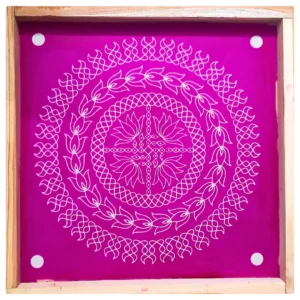
Floral patterns are ideal for beginners. A basic flower design can be as simple as four or five petals arranged symmetrically around a central point. These designs are not only beautiful but also easy to execute.
2. Geometric Shapes:
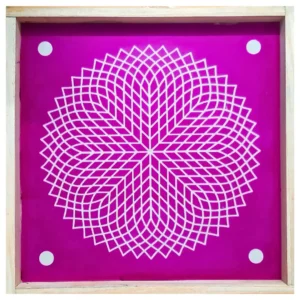
Geometric Rangoli designs, such as squares, triangles, or circles, are great for those new to the art. You can experiment with symmetry and layering, creating a clean and structured design.
3. Swastik or Om Symbol:
Both of these symbols are highly auspicious and commonly used during festivals like Diwali. They are simple to draw and carry spiritual significance, making them a popular choice.
4. Dotted Designs:
Dotted Rangoli patterns are created by arranging small dots in a pattern, which can then be connected using colored powders. These are perfect for beginners because the dots serve as a guide to maintaining a uniform design.
Tips for Success
- Start Small: If you’re just beginning, start with small designs and gradually work your way up to more elaborate ones.
- Symmetry is Key: Use a ruler or measuring tools to ensure your design is symmetrical. This will help the design look balanced and neat.
- Play with Colors: Don’t be afraid to experiment with color combinations. Bright, contrasting colors often work well, but you can create more subdued and elegant designs using softer tones.
- Use Stencils: If freehand designs seem intimidating, use Rangoli stencils. They will help you create clean, consistent patterns without stress.
Conclusion
Creating Rangoli is a delightful experience that brings beauty and positivity to any space. Whether you’re decorating for a festival, an event, or just experimenting with your creativity, Rangoli designs are a wonderful way to connect with tradition while expressing yourself. With a little practice and the right tools, you’ll soon be able to create stunning Rangoli patterns that will impress everyone around you.
So, grab your colors, get creative, and let your Rangoli journey begin!


Leave a Reply